
Kanabec County Traffic Warrants Explained
Traffic tickets written anywhere in Kanabec County, whether in Mora, Ogilvie, Grasston, or Quamba, land in one place: the District Court. There is no separate municipal traffic court here. Every citation becomes part of the same system that handles the county's other cases. Keep the two documents straight. A citation is a charging and appearance paper, common in misdemeanor and traffic matters, and it offers three ways to respond: by a deadline, by payment, or by contesting the charge. A warrant is different. It arrives only when the response never happens. Three failures will trigger one. A driver can ignore the citation, miss the court date that follows it, or fail to meet an order the judge set. Any of those turns the case toward a warrant that carries the same force as other court process.
Kanabec Traffic Warrant Court
Minnesota puts traffic cases in the district courts. For Kanabec County, that means Kanabec District Court, part of the Tenth Judicial District, controls both the case and any warrant tied to it. The routing is simple once you see it. A city hall can field a question about a local ordinance. A city clerk can steer a resident to the right door. Neither holds the traffic case file, though. The court does, and the citation number is the quickest way to reach it. Behind the citation process sits Rule 6, which sets when a citation is used, what release conditions apply, and what follows if those conditions are broken.
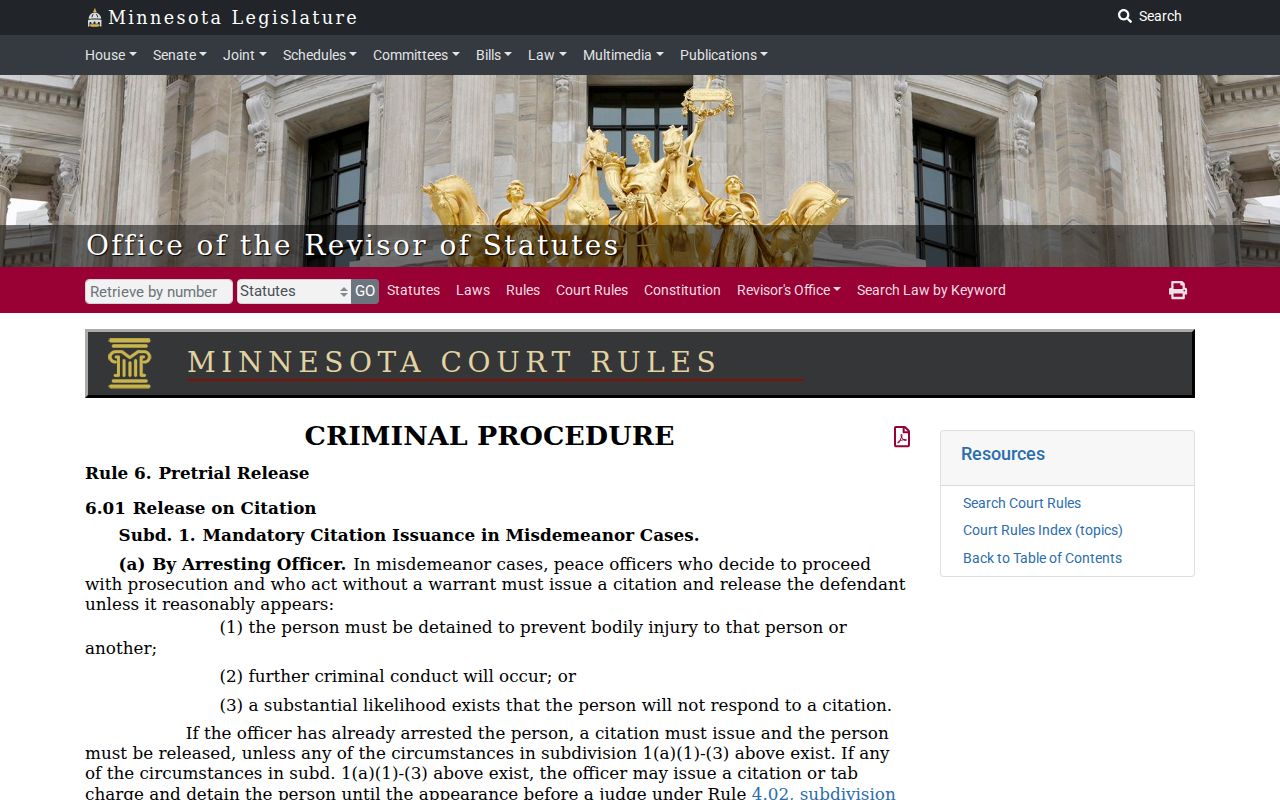
That rule text is the framework behind every traffic citation in Kanabec County. It explains why a city office cannot resolve a court case. Note: A city office can route an ordinance notice, and only the court can confirm or change a traffic case.
Checking for a Traffic Warrant
Work from the paper in your hand. A citation carries a number, a date, and a court location, and those three details speed up every later step in Kanabec County. Then check the case through each channel that applies.
- Read the citation for the case or citation number, the offense date, and the court named on the form.
- Search the case in Minnesota Court Records Online with Kanabec County selected.
- Call Kanabec Court Administration at 320-679-6400 and ask whether a warrant exists and what type it is.
- Call the sheriff's warrant line at 320-679-8400 for enforcement-side status if a warrant shows.
- Use the county warrants page and its published list as a lead, keeping the nightly update in mind.
Minnesota offers no public statewide warrant lookup. No second database will settle the question, so the Kanabec County court file is the one that counts.
When a Kanabec Citation Becomes a Warrant
Many people assume a ticket and a warrant arrive together. They do not. A citation asks for a response, and the court simply waits for it. Nothing in Kanabec County becomes a warrant until the response fails or a court order goes unmet. The state's vocabulary is also narrower than expected. Official Minnesota material uses warrant, bench warrant, failure-to-appear warrant, and sign-and-release warrant. The Texas-style capias and capias pro fine labels never appear in the state's public materials, so hunting those terms will not surface a Kanabec record. The distinction matters when a ticket is paid late or handled at a counter. Ask the court whether the case generated process. That is a separate question from whether a fine was recorded, because the two entries live in two separate systems.
Inside a Traffic Warrant Record
A traffic warrant record is brief. Most of it comes straight from the case that produced it. In Kanabec County, read the identifier and offense lines first, then the status, then anything on payment or release.
| Case or Citation Number | Minnesota case numbers combine county, case type, year, and sequence, as in 33-CR-25-418 |
|---|---|
| Offense | The violation as charged on the citation |
| Offense Date | When the violation was alleged, which is separate from the warrant date |
| Issuing Court | Kanabec District Court, Tenth Judicial District |
| Fine and Costs | The amount the case carries, where the court set one |
| Status | Open, served, recalled, or resolved, confirmed with the court |
One field deserves caution. A dollar figure on a Kanabec County case is not a clearance price, and paying it is not always the right move for a driver who intends to contest the citation.
Kanabec Warrant Payment Warning
Minnesota's court payment page carries a warning that catches people off guard. Paying a fine enters a guilty plea and waives rights. Payment closes the citation on those terms. That is fine for a Kanabec County driver who accepts the charge, and a real problem for one who does not. The same page spells out what happens when a ticket goes unanswered. Failure to pay or appear can bring a warrant and late penalties. Traffic violations can also carry license consequences under the statutes and rules the courts apply. So sequence your decisions. Decide first whether to contest the citation, then how to handle the money. A driver who needs more time can ask about a payment plan rather than pay under protest. One who wants to fight the charge should ask the court for a hearing date before paying anything.
How to Pay or Lift a Traffic Warrant
A Kanabec County traffic warrant is resolved by the court that issued it. Payment is one path, but not the only one, and not a neutral one.
Before paying: Call 320-679-6400 and ask whether a warrant is open, what the case requires, and whether payment would resolve it. Payment in Minnesota courts carries a guilty-plea and waiver warning.
Most drivers in Kanabec County have four ways forward. Paying the fine and costs closes the citation once the charge is accepted. A payment plan spreads the amount over time instead. A new court date answers a missed appearance. When a warrant should not stand, a motion or court request can address it, though that route needs an attorney. Minnesota also uses a sign-and-release warrant in some failure-to-appear cases. That type authorizes no arrest. It simply sets a new appearance date, which is why the confirmation call should always ask about the warrant type before anything is paid.
Kanabec Warrant Payment Plans
Minnesota routes citation payments through its statewide court payment system. The state page lays out the option a driver needs when the amount is the problem. The Court Payment Center can explain payment plans and appearance options. It needs the citation information first. Timing matters too. Payment-plan processing can take two to three business days, so anyone close to a deadline should call rather than wait on a web form. Confirm eligibility and local routing live. A plan that fits one case type may not fit another. Kanabec County lists no local citation payment counter and no municipal-ordinance payment page. That leaves two channels. Use the state payment route or Kanabec County Court Administration.
Traffic Warrants, FTA, and License Holds
In Kanabec County traffic cases, three consequences tangle together: warrants, failures to appear, and license holds.
| Item | What it is | Where it is handled |
|---|---|---|
| Traffic citation | A charging and appearance document with a response date | The District Court that received the case |
| FTA warrant | Court process issued after a missed response or appearance | The judge in that case, enforced by the sheriff |
| License consequence | A statutory result the court and state agencies apply in traffic cases | The court case first, then the state agency involved |
Order matters here. Resolve the court case first. Only then can the license side settle. A Kanabec County driver who asks only about a driving record may never learn a warrant started the problem. Keep the questions with the court, and treat any license effect as a consequence of the case rather than a separate search product.
Confirming a Kanabec Traffic Warrant
An in-person trip to Mora is worth planning. The courthouse sits on Maple Avenue East. Court Administration keeps hours of 8:00 a.m. to 4:30 p.m. Monday through Friday, a narrower window than the Kanabec County sheriff's round-the-clock dispatch line. Call first. Confirm four things: whether the case has an open warrant, what type it is, whether an appearance is already calendared, and what payment or paperwork the counter takes that day. Ask whether the matter can be handled by mail or online instead. A resolved case needs no trip. Then nail down the small details that waste visits. Which entrance is open? Is identification required? Can the counter issue a certified copy or proof of payment? Kanabec County court records policy allows public terminal access to most records, and plain copies carry no fee.